the quilting corner · precision report
7 Popular Quilting Fixes I Tried Before I Found the Real Reason My Points Wouldn't Match
Why my blocks stayed wonky after $289 of grip dots, sharper blades, better lighting, expensive slotted rulers, and every accuracy tip the quilting blogs told me to try...

By Carol Ann Mercer, quilter of 17 years
Updated June 2026 · ★★★★★ 50,000 customer reviews
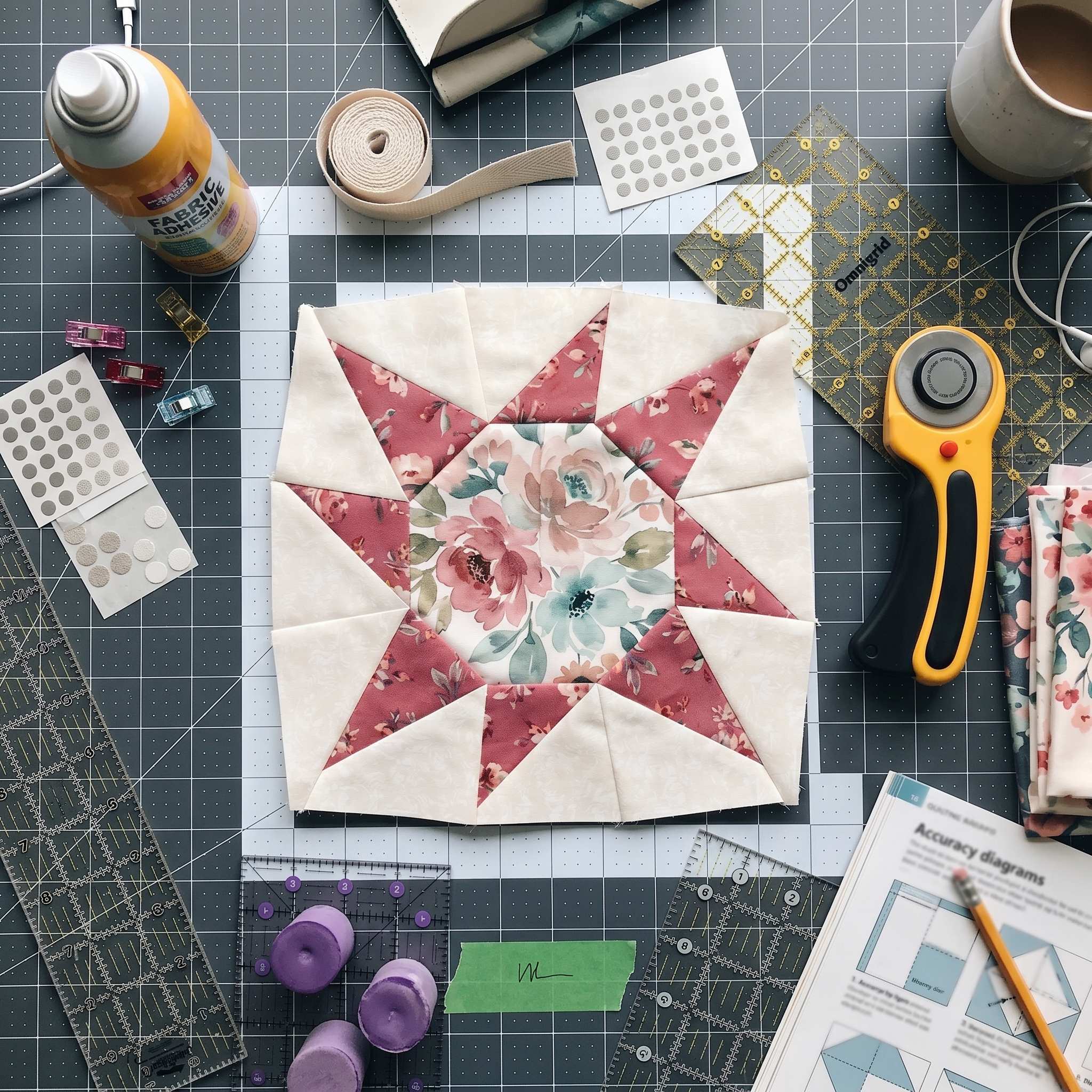
I have been quilting for 17 years. Two hundred plus quilts. It is not my hobby. It is who I am.
And for 17 years my blocks were close but never square. Just enough off that I trimmed every one and hoped nobody looked at the corners.
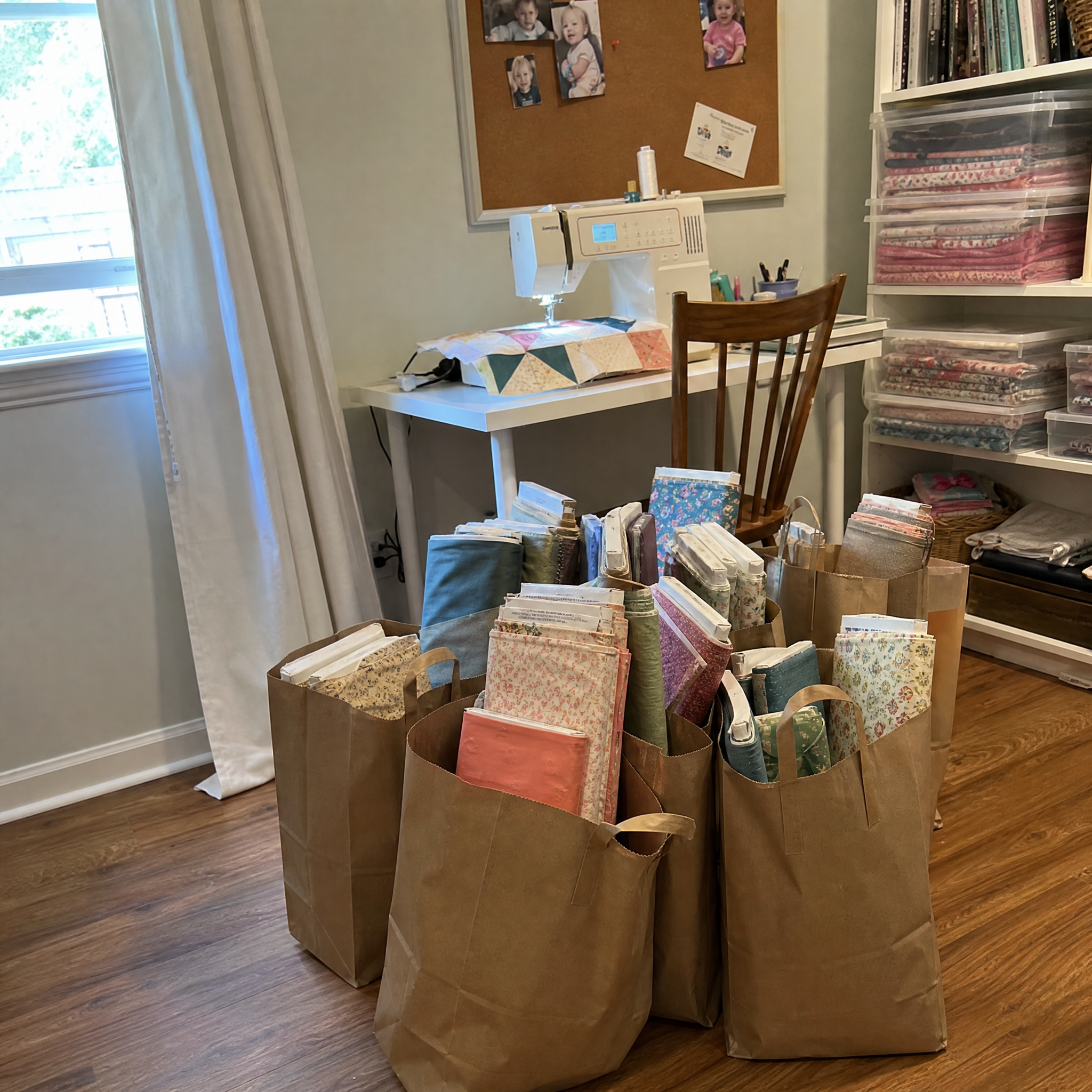
The one that hurt most was a blue and cream sampler I started for my granddaughter. I ripped out two rows, then folded the whole top into a grocery bag and told myself I would fix it later. It is still in that bag.
I blamed my eyes. My hands. My grip. My technique. My age. I added it up once: two hundred and eighty nine dollars spent trying to fix my eyes, my hands, and my grip.
Still wonky.
Then a retired machinist named Howard joined our guild. Forty one years measuring metal to the thousandth of an inch before his daughter taught him to quilt. He did not argue. Old tool men rarely do. He measured.
I was not looking for another ruler. I was looking for the reason the good rulers still left me trimming the truth away.
What he found ended 17 years of blaming myself. Here are the seven fixes I tried, counted down from the one that helped least to the one that finally solved the cut.
Fix #7 Better Lighting and Stronger Reading Glasses
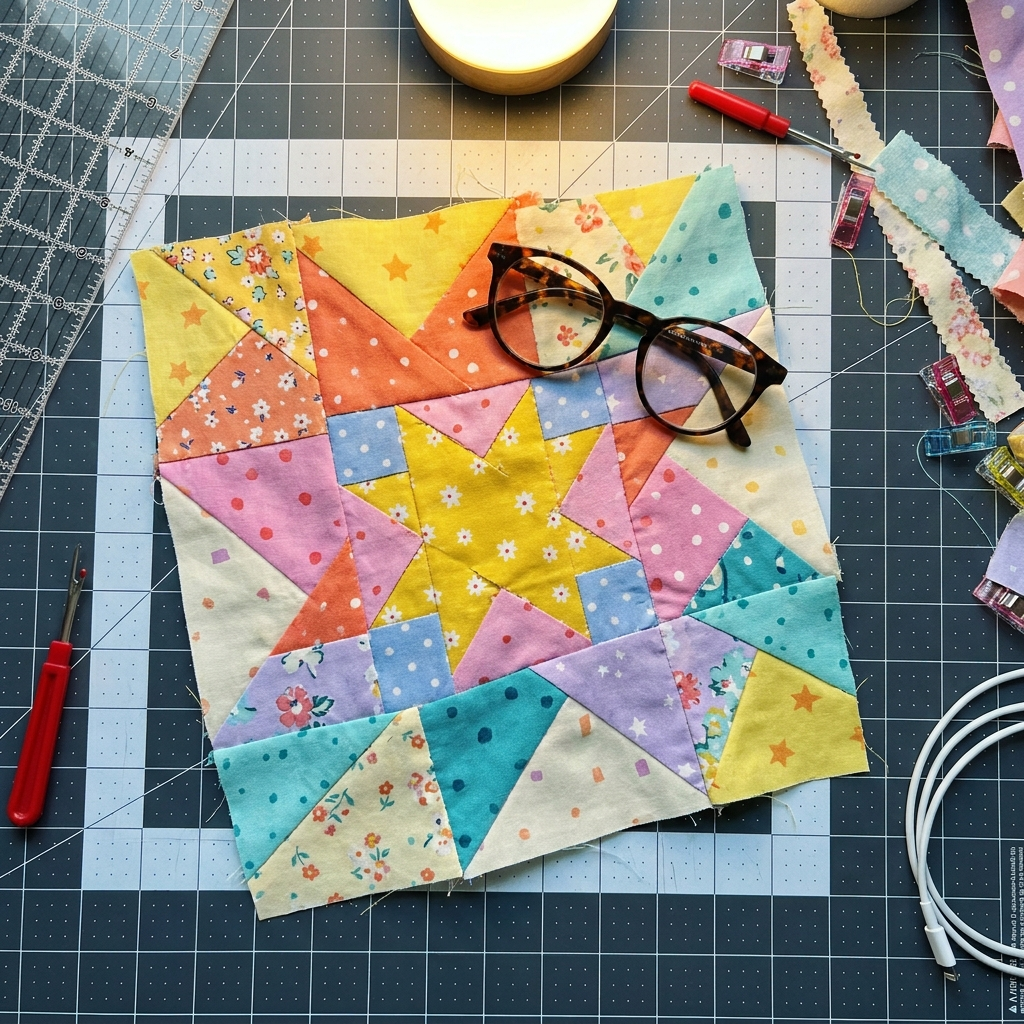
If I could just see the line, I could cut to the line. So I bought the ruler with bright yellow markings, added a daylight lamp, and leaned in until my nose nearly touched the mat.
It helped me see. It did nothing for my blocks.
Howard is older than I am, and his eyes are worse than mine. Yet his pieces still come out matched. Whatever was wrong, it was not behind my glasses.
Better light. Same slot.
Quilter's Accuracy Test:
- Helped me see the markingsYes
- Stopped ruler slipNo
- Controlled blade driftNo
- Easier on tired handsNo change
Verdict : Partial fix. Helped my eyes, not my blocks.
Fix #6 Sharper Rotary Blades
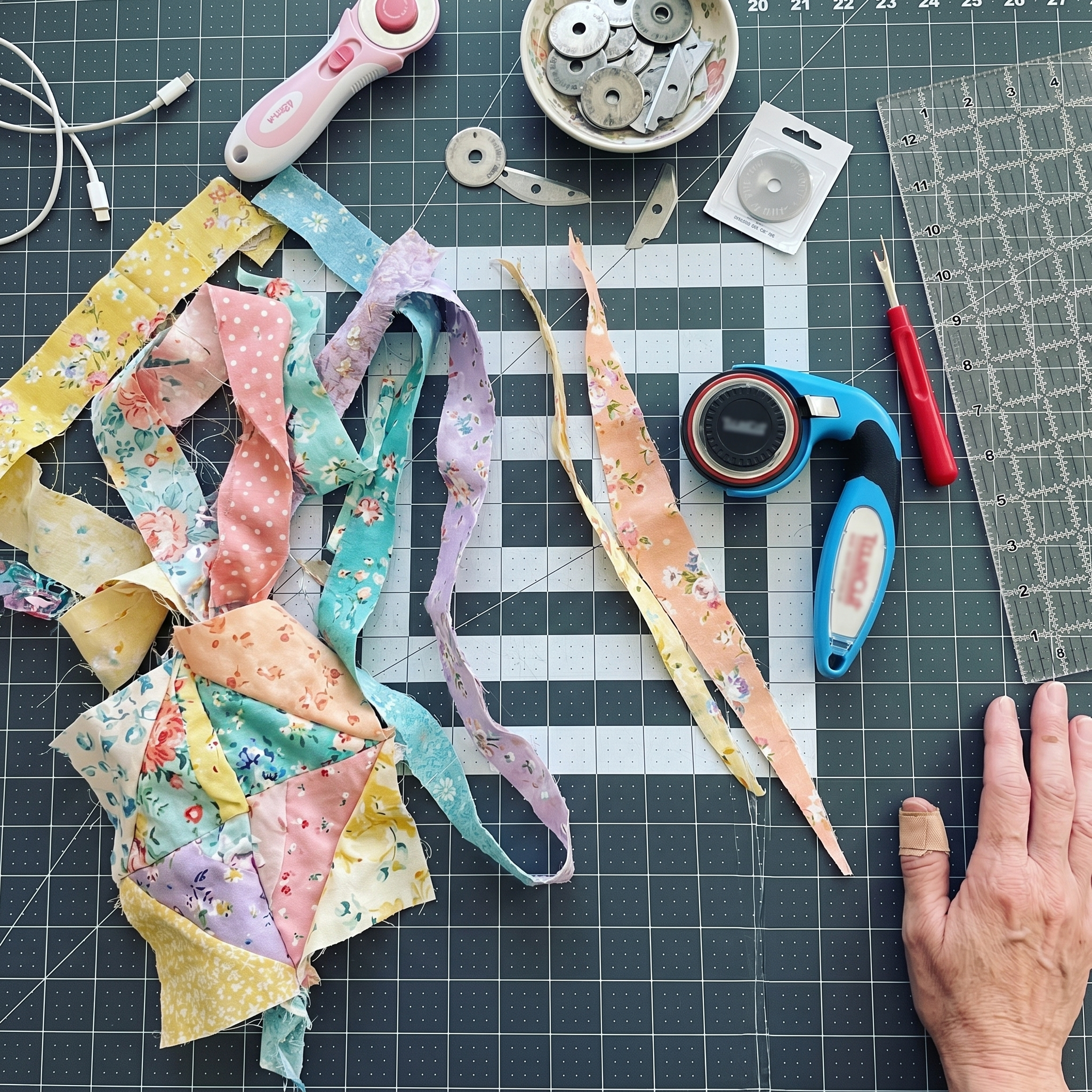
I started changing my blade far more often. A fresh Olfa or Fiskars blade cuts smoother, with less drag. I was sure a dull blade had been the culprit.
It was not. A sharp blade that has room to wander still wanders. It just wanders cleanly.
The cut felt nicer in my hand. The strips were no straighter than before.
Sharper blade. Same drift.
Quilter's Accuracy Test:
- Helped me see the markingsNo
- Stopped ruler slipNo
- Controlled blade driftNo
- Easier on tired handsSlightly
Verdict : Partial fix. Smoother, but smoother drift is still drift.
Fix #5 Grip Dots, Non-Slip Tape, and Sprays
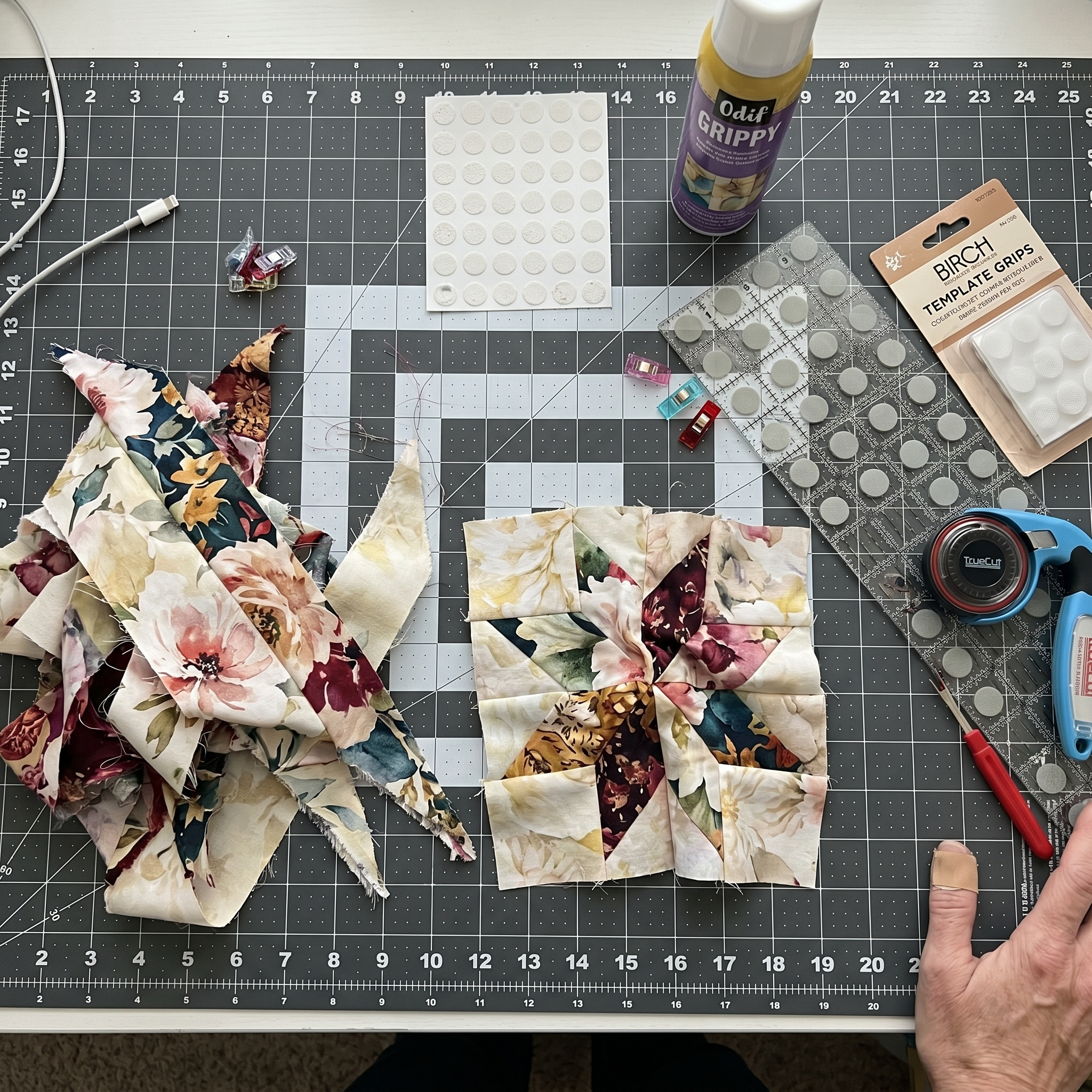
This is where most of us spend real money, because the forums all swear by it. Grip dots at twelve dollars a sheet on every ruler I owned. Non-slip tape. A spray that wore off in a week.
It worked for the one thing it actually addresses. It stopped the ruler from sliding on the fabric.
But my error was not the ruler sliding. It was the blade moving inside the slot. Two different problems.
"Grip controls the ruler. Tolerance controls the blade."
More grip. Same blade play.
Quilter's Accuracy Test:
- Helped me see the markingsNo
- Stopped ruler slipYes
- Controlled blade driftNo
- Easier on tired handsSlightly
Verdict : Partial fix. It held the ruler, never the blade.
Fix #4 Weighted Rulers and Pressing Harder
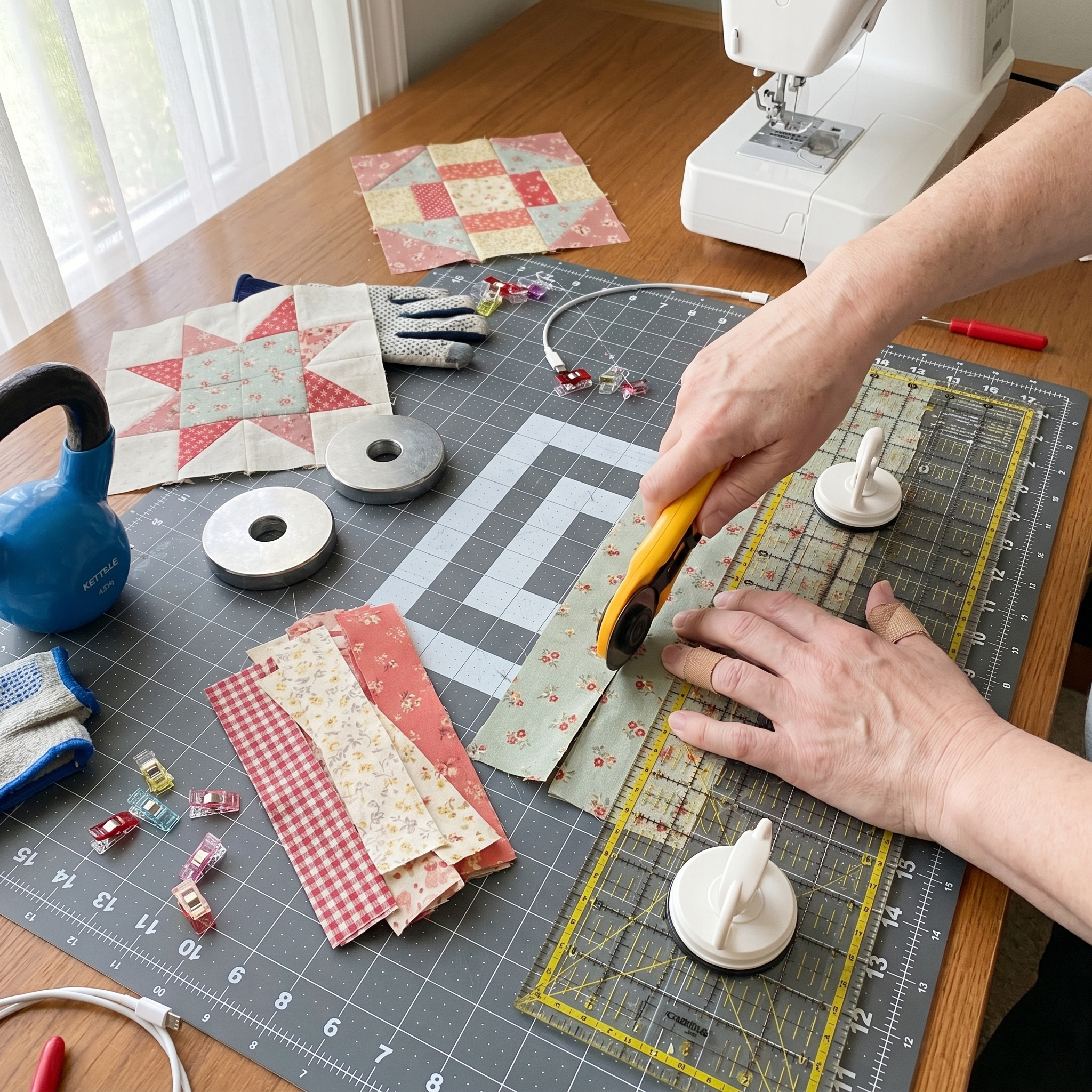
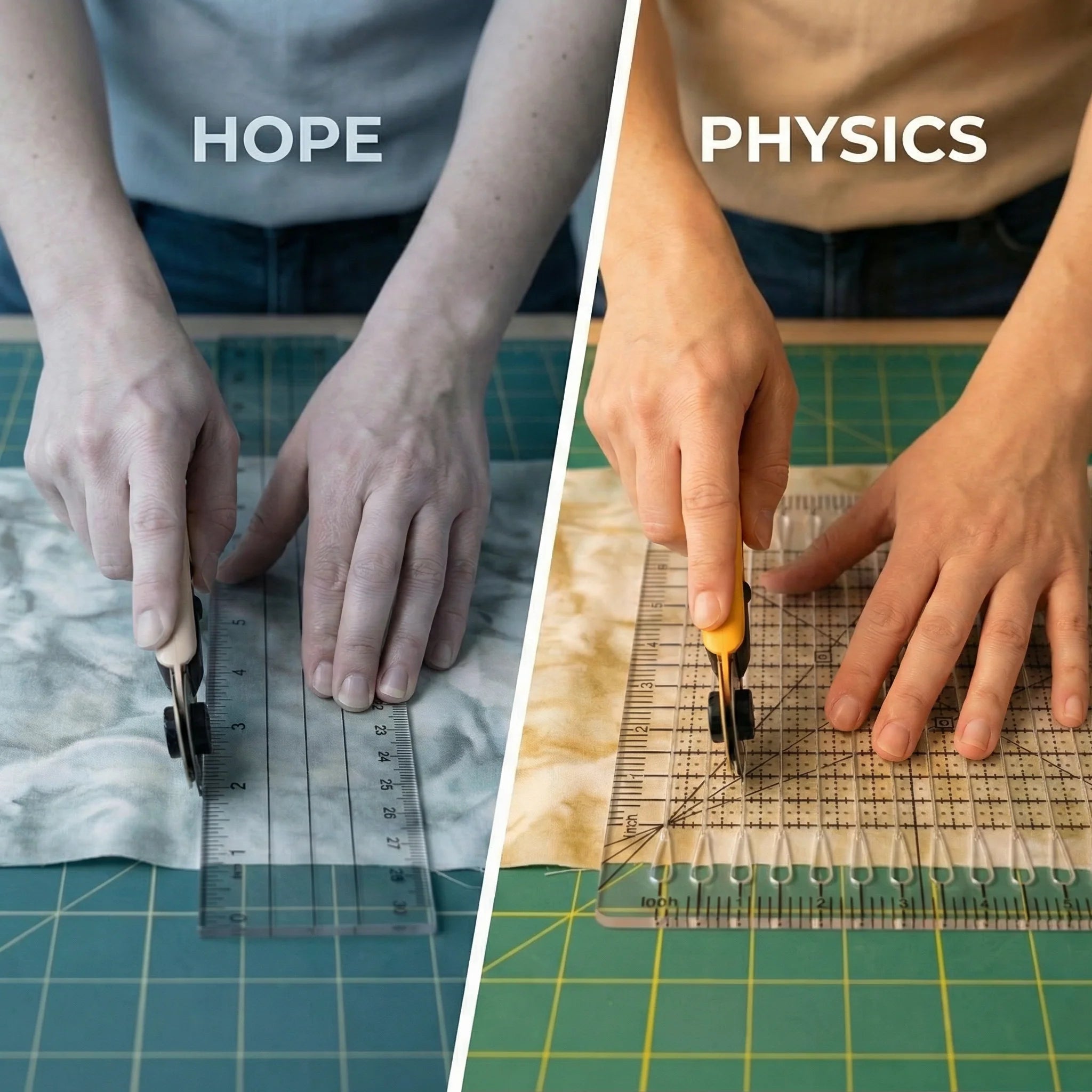
The theory sounded right. Heavier means steadier. So I bought a weighted ruler for sixty five dollars and took the standard advice to heart: hold it down, press harder, walk your fingers up the ruler like a spider.
It felt more secure. It cost me a shoulder.
The blade still had all the room it ever had to drift. I was just fighting it harder with my body. More pressure is not precision.
More pressure. Same precision problem.
Quilter's Accuracy Test:
- Helped me see the markingsNo
- Stopped ruler slipSomewhat
- Controlled blade driftNo
- Easier on tired handsWorse
Verdict : Still wonky. And my shoulder paid for it.
Fix #3 The Famous Slotted Rulers
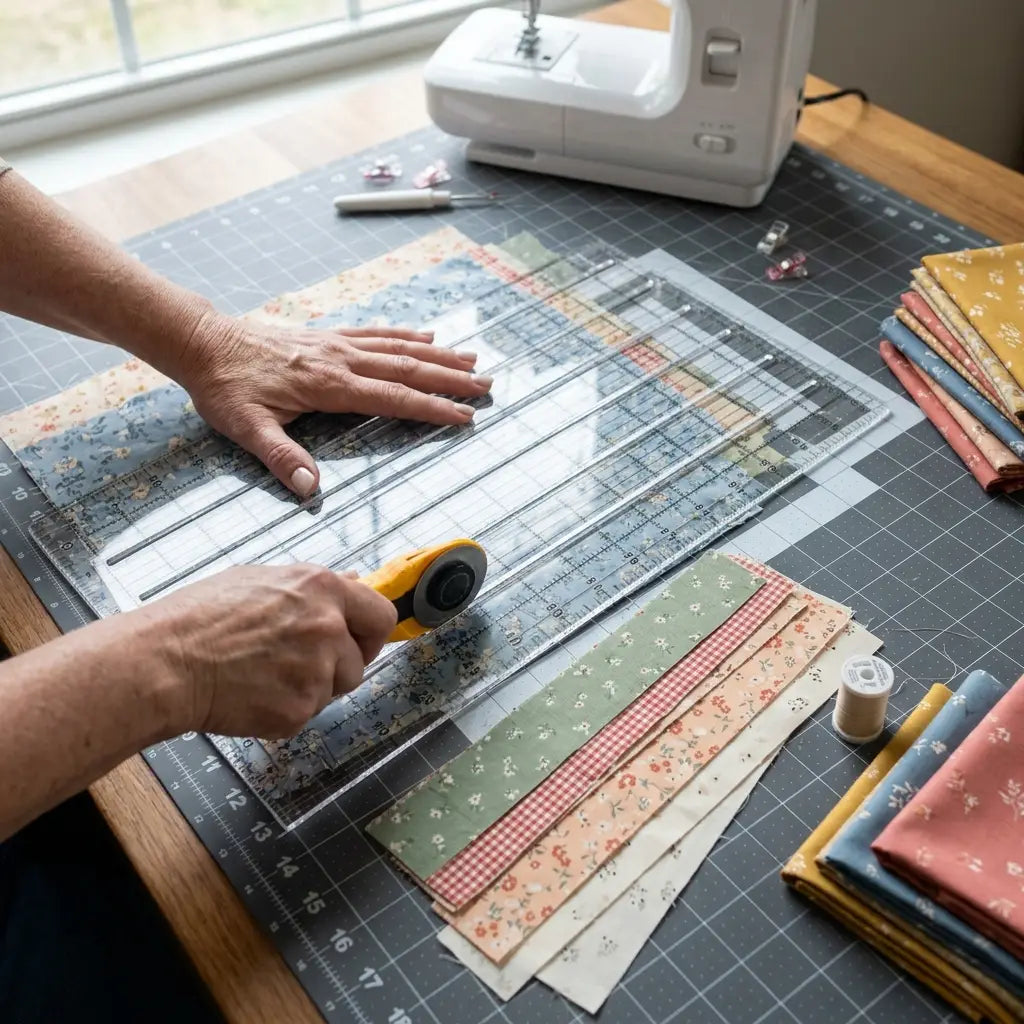
I had tried the names quilters actually recommend. The famous $80 one. The square one everyone keeps in the cabinet. The grown up choice.
And to be fair, they helped. They lined me up faster. Some helped the ruler grip the mat. But none of them made me ask the question Howard asked: how much room does the blade have inside that slot?
He slid his feeler gauge into the slot. "Two point eight millimeters of play. Your blade is about a third of a millimeter thick." The slot was almost ten times wider than my blade needed.
Those rulers gave my blade a place to go. They did not give it walls tight enough to stop swimming side to side.
“I trusted the famous $80 ruler for years. No one ever told me to check how much room the blade had in that slot.”
Famous ruler. Same clearance.
Quilter's Accuracy Test:
- Helped me see the markingsNo
- Stopped ruler slipSlightly
- Controlled blade driftNo
- Easier on tired handsBetter
Verdict : Still wonky. The closest I came, and the clearance was still there.
Fix #2 Quilting Blog Accuracy Tips
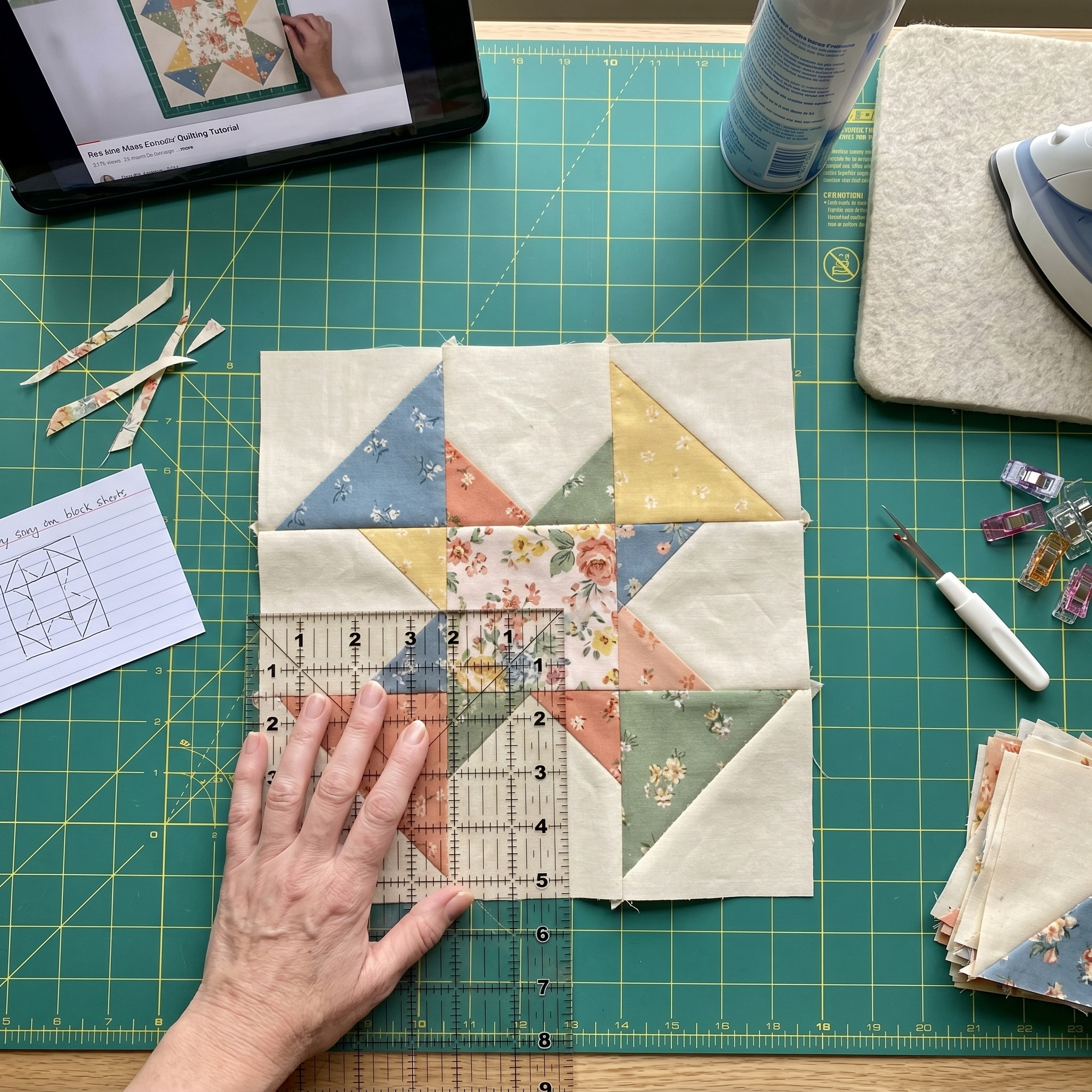
I did everything the blogs said. I checked my scant quarter inch. I pressed to one side. I nested seams. I pinned the points. I starched the fabric. I slowed down through every intersection.
I squared up HSTs, flying geese, nine patches, and sampler blocks until I was trimming more truth away than fabric.
All of that helps. I still do most of it.
But none of it fixes a strip that was already cut a hair off before it reached the machine. Technique cannot rescue fabric that was cut wrong. That was the quiet thing I had missed for 17 years.
Better seams. Same crooked cut.
Quilter's Accuracy Test:
- Helped me see the markingsNo
- Stopped ruler slipNo
- Controlled blade driftNo
- Easier on tired handsNo
Verdict : Helps the sewing. Cannot fix the cut.
The fixes, side by side
Six fixes. Real money. Only one of them ever controlled the blade.
| Tool or Fix | What it helped | What it missed | Channel / blade control | Verdict |
|---|---|---|---|---|
| Better lighting | Seeing the line | The blade moving | None | Helped my eyes only |
| Sharper blade | A cleaner edge | Sideways wander | None | Smoother, still drifted |
| Grip dots & tape | Ruler slipping | Blade in the slot | Holds ruler, not blade | Held ruler, not blade |
| Weighted ruler | Felt more secure | Blade freedom, my shoulder | Holds ruler, not blade | Pressure, not precision |
| Famous slotted ruler | Speed, alignment | The clearance around the blade | Wide slot, ~1.6–3.2mm | Fast, the gap stayed |
| Quilting blog tips | Better sewing | A cut already off | None | Fixes the seam, not the cut |
| WinnerStitch & Square Precision Ruler | Blade drift inside the slot | The problem the others missed | 0.50mm target cutting channel | Controlled the blade-drift problem where the others did not |
Look down the channel column. Wide gaps or none at all, then one narrow 0.50mm target. That is the difference you can measure.
Fix #1 · The Winner The Stitch & Square Precision Ruler Zero-Drift Channel
Howard handed me his own ruler. It looked like the famous one. But you feel the difference before you make the first cut.
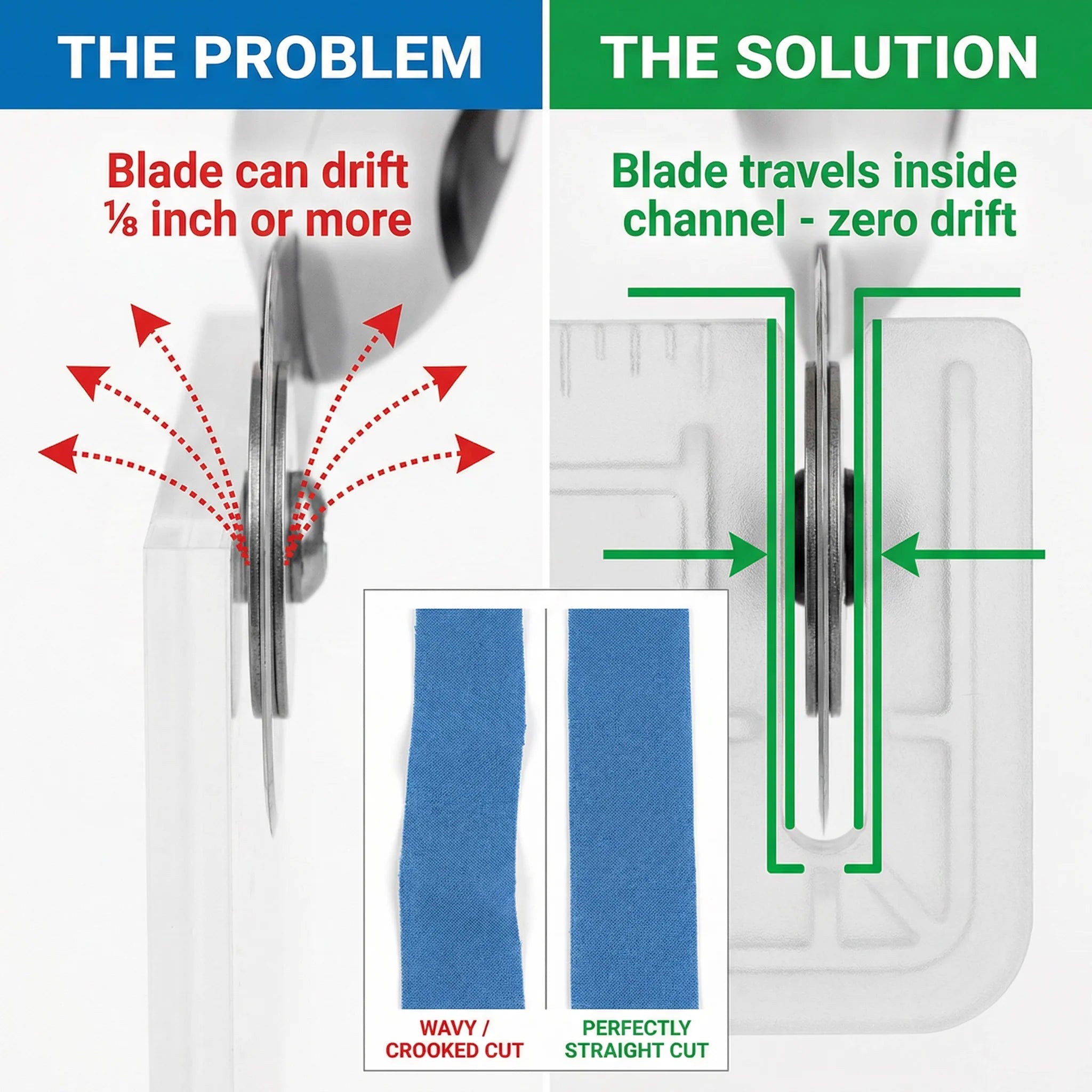
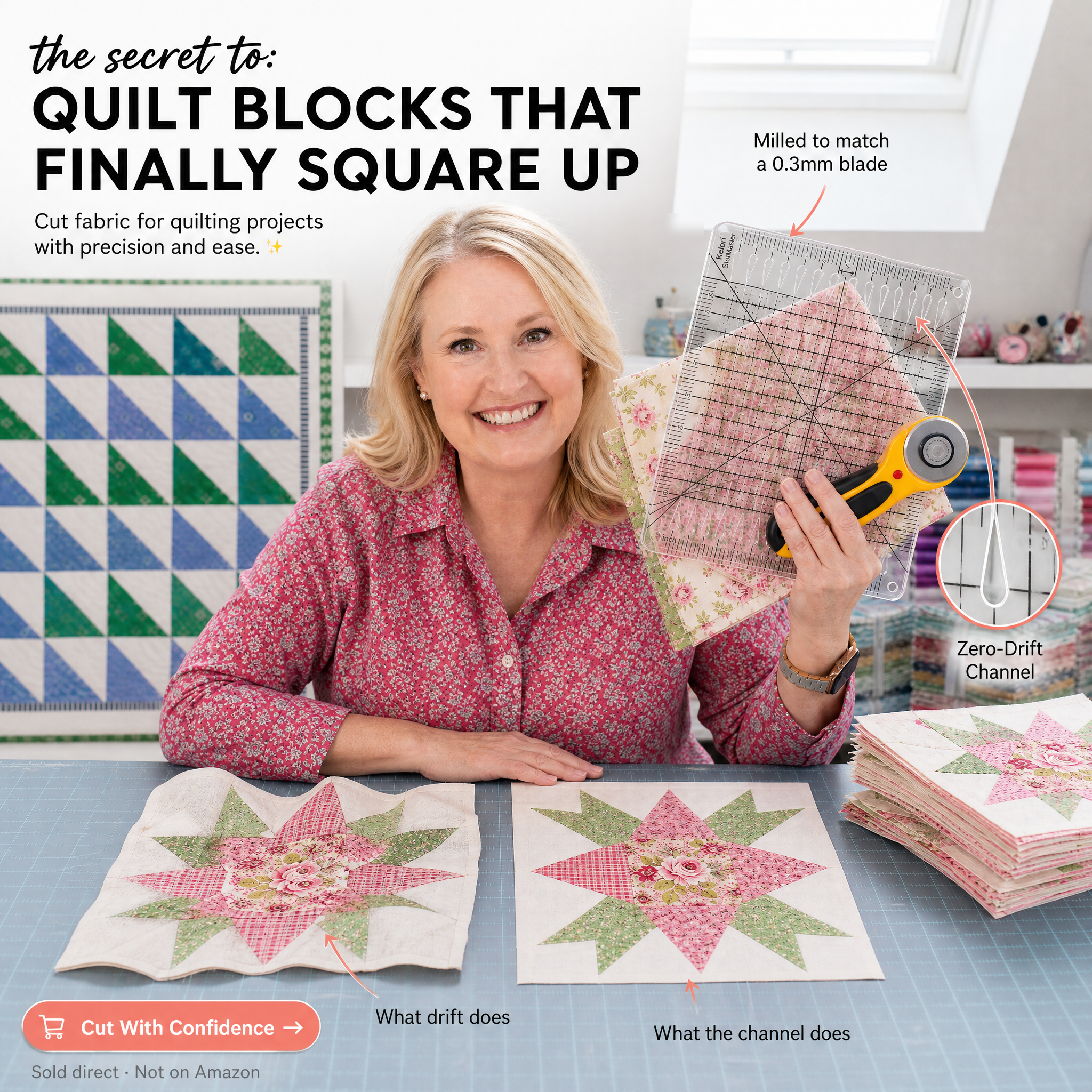
The blade drops into the wide teardrop opening easily. Then it enters the long cutting channel and stops swimming around. It seats. It clicks. The channel walls take over the sideways job your wrist has been doing for years.
That was the detail I had never understood. The teardrop opening and the cutting channel are not the same thing. The teardrop can stay wide so the blade enters easily. The long channel can be narrow so the blade has far less room to drift once it is cutting.
His was a Stitch & Square Precision Ruler, built around the Zero-Drift Channel. The slot is the commodity. Every slotted ruler has one. What decides whether your blocks match is the width of the channel after the blade drops in.
The Precision Ruler's long cutting channel is manufactured around a 0.50mm target, with an acceptable range of 0.45mm to 0.55mm. A common rotary blade edge is about 0.30mm. That leaves just enough room to roll, without the wide side-to-side swim I had felt in my old ruler, where the channel ran anywhere from roughly 1.6mm to 3.2mm.
"A wide slot gives you a path. A narrow channel gives the blade walls."
Here is the simplest way I can put the switch:
My old ruler gave the blade a slot. The Precision Ruler gave it a track.
The famous ruler helped me line up. The Precision Ruler helped keep the blade from wandering.
The famous ruler made cutting faster. The Precision Ruler made the cut stop changing.
And here is the part that undid the worst lie. Howard's hands shake more than mine, and his strips matched edge to edge. Same blade I use. Same tired eyes. Different tolerance.
It was never my age. It was never my hands. It was the tool, and the tool can be changed.
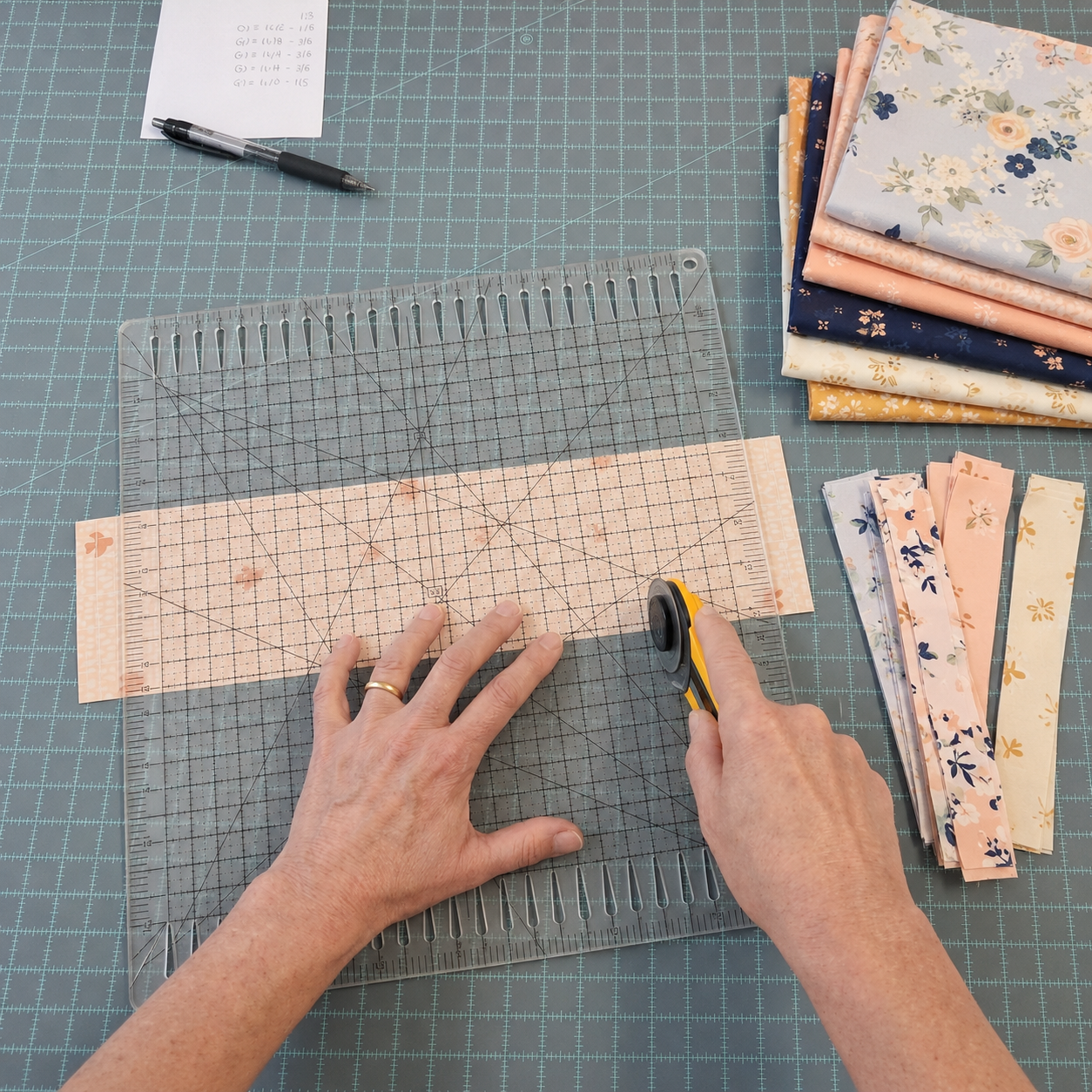
The first stack I cut, the tenth strip matched the first. The rows stopped fighting me. I did not have to trim the truth away.
Same hands. Same blade. Different tolerance.
“I am blown away by how easy cutting strips became once I invested in this ruler. Hands down one of my favorite and most cherished notions in my whole sewing room.”
Quilter's Accuracy Test:
- Helped me see the markingsYes
- Stopped ruler slipYes
- Controlled blade driftYes
- Easier on tired handsBetter
Verdict : The first thing in 17 years that controlled the blade-drift problem the others missed.
How the drift actually happens
- A rotary blade edge is about 0.30mm.
- Many wide channels leave far more room than that, roughly 1.6mm to 3.2mm.
- The more room around the blade, the more it can swim side to side.
- One strip comes out off by a hair. You never see it.
- 10+ strips later, that hair becomes a ripple across the block.
The Precision Ruler narrows the long cutting channel to about a 0.50mm target, while keeping the teardrop entry wide.
That is why the blade drops in easily but has far less room to drift once it is cutting. Grip dots, weighted rulers, sharper blades, and seam tips never touch that, because none of them change the width of the channel around the blade.
Why it works
→ The teardrop lets the blade in.
● The 0.50mm channel keeps it from swimming.
What changed once I trusted the cut
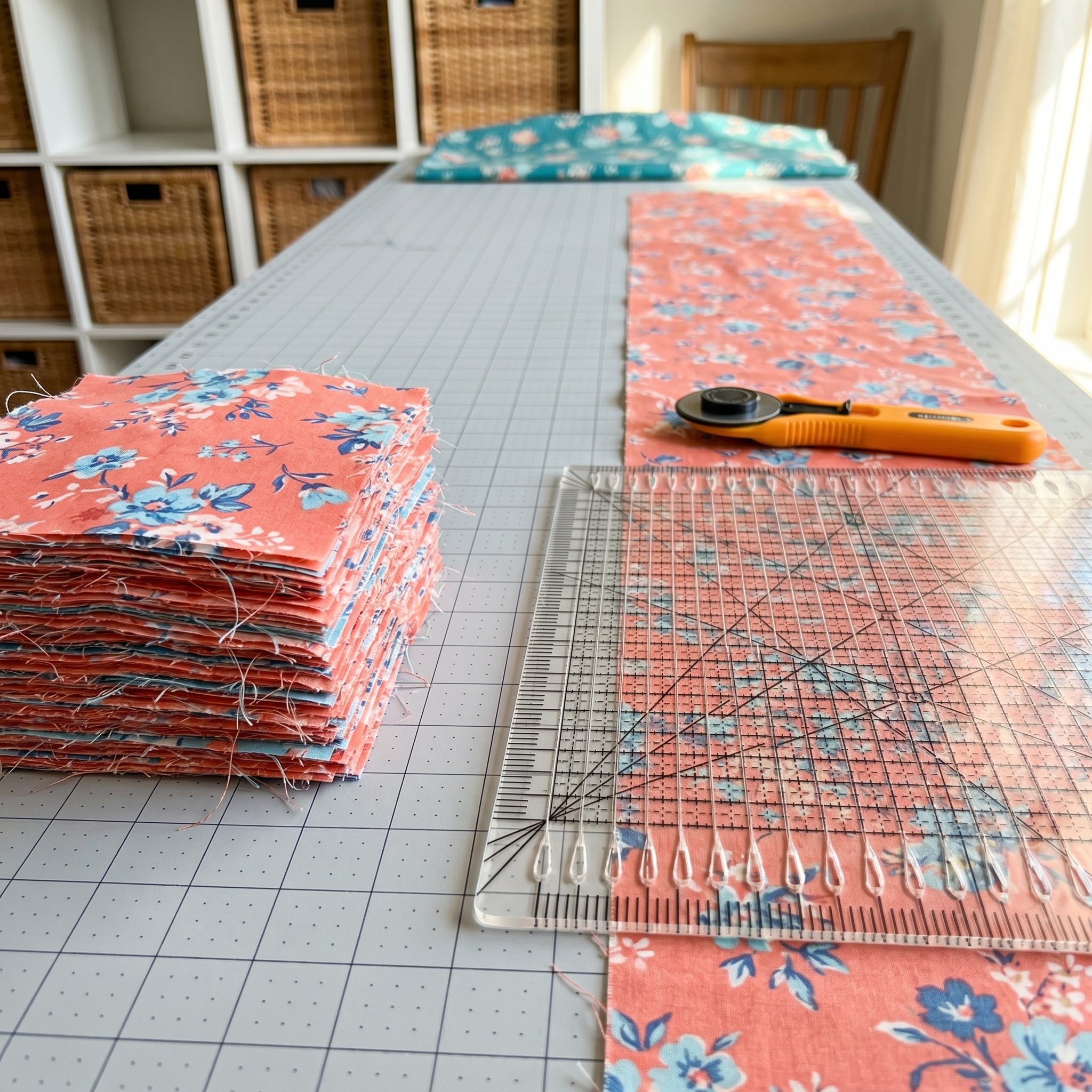
I ran my old test. Twenty strips and twenty squared blocks from scrap. The tenth strip matched the first, and the rows finally laid down without a fight.
I still make plenty of mistakes at the machine. What changed is that the cuts stopped changing on me.
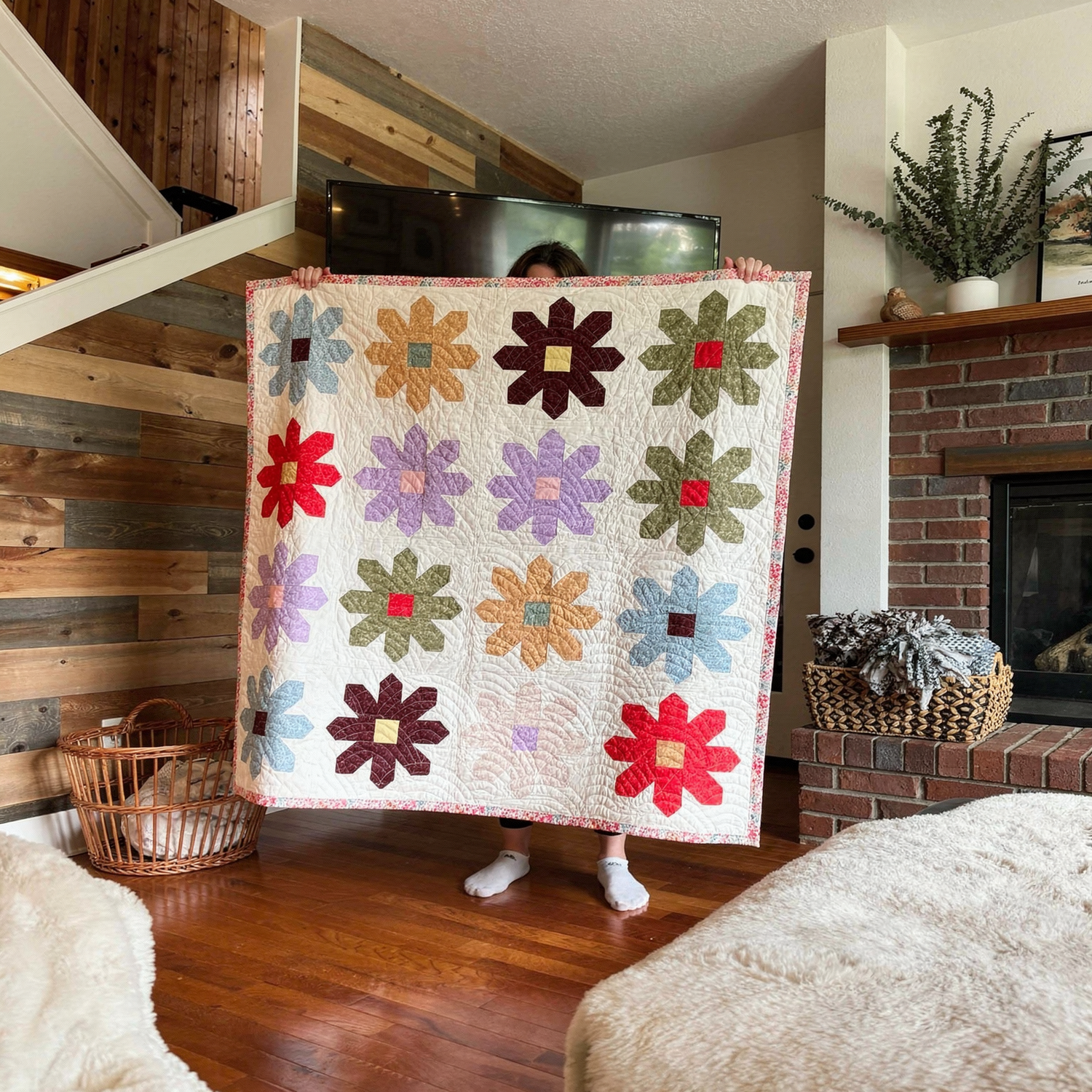
I showed my next quilt at guild, the first one that lay flat. Three women ordered that night. One texted me the week after:
"My nine patch blocks are actually the same size for the first time in eleven years."
That is why I do not think most women are buying it as another ruler. They are buying back the part of quilting they thought they were losing.
The part that made me mad was not just that Stitch & Square worked. It was that I had spent $289 trying to fix my hands when the real fix was the channel.
See if today's Precision Ruler offer is still available
⏰ Claim the Summer Sale: 250th American Anniversary 🇺🇸
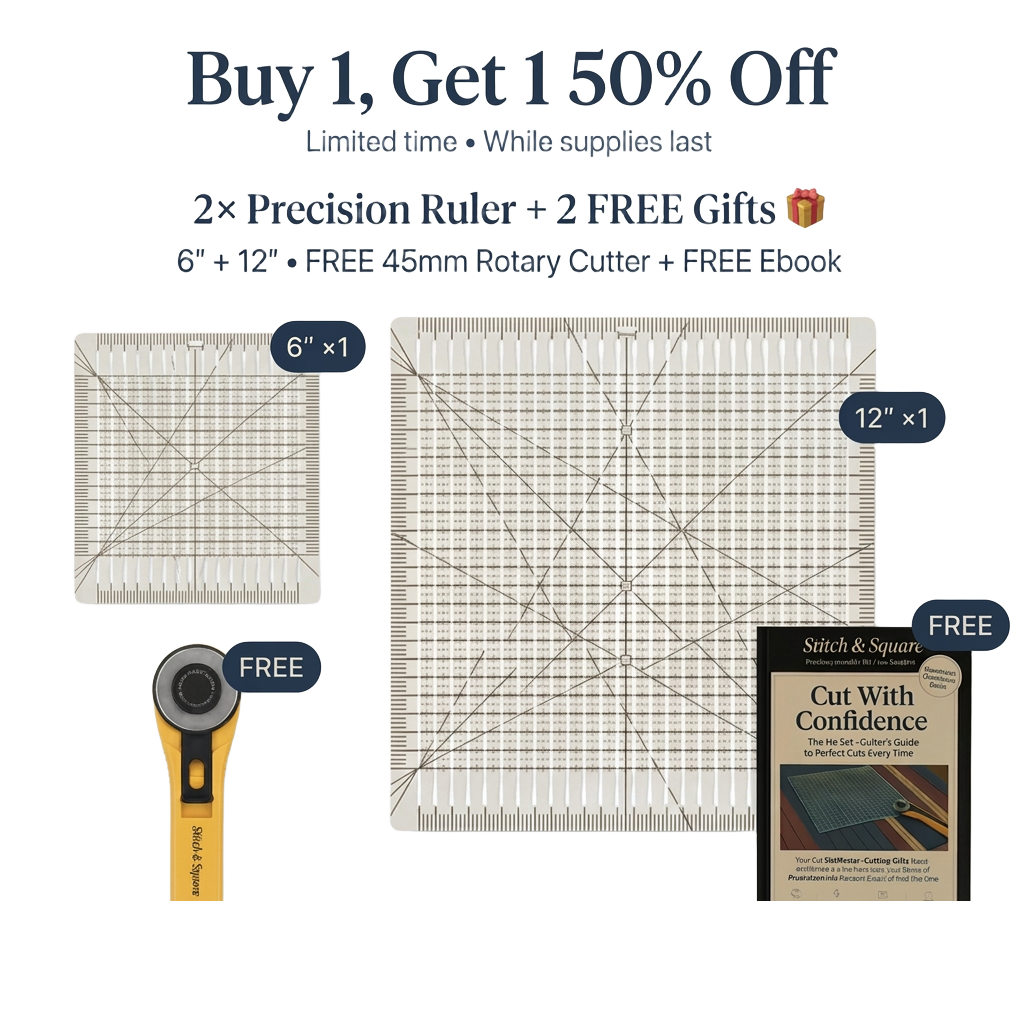
Buy One, Get One 50% Off + 2 Free Gifts Today 🎁
★★★★★ 50,000 customer reviews
This is the ruler Howard handed me. The teardrop opening lets your blade drop in easy, then the 0.50mm cutting channel gives it far less room to swim side to side, so the cut stops changing on you.
Same blade, same hands, different tolerance. Cut your first stack of strips and feel the channel take over the job your wrist has been doing for years.
- ✓ FREE 45mm Rotary Cutter + Quilting eBook
- ✓ FREE Secure Shipping
- ✓ Buy One, Get One 50% Off
FREE shipping | ✓ 60-Day Good Fabric Guarantee
Checked before shipping · FREE Secure Shipping · Direct only at Stitch & Square